


A fixed ball valve, often called a trunnion mounted ball valve, is a robust, high‑performance valve design used in demanding
pipeline systems. In many industrial applications, choosing between a floating ball valve and a fixed ball valve directly affects
safety, reliability, operating cost, and maintenance strategy. Understanding when to use a fixed ball valve is essential for
engineers, designers, maintenance managers, and operators who work with pipelines for oil and gas, petrochemical, power,
water transmission, and other critical services.
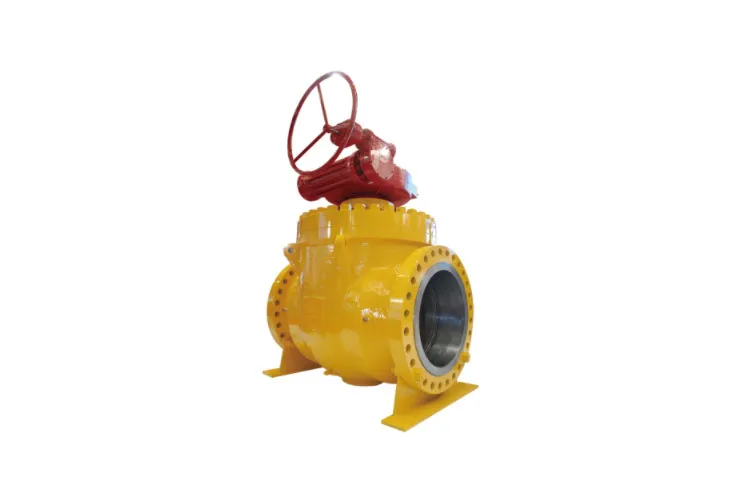
A fixed ball valve is a type of ball valve where the ball is mechanically restrained by trunnions or bearings at the top
and bottom. Unlike floating ball valves, the ball in a fixed ball valve does not move downstream under differential pressure.
Instead, the seats are spring‑loaded or pressure‑energized to maintain tight contact with the ball.
In pipeline systems, fixed ball valves are widely used as mainline isolation valves, block valves, station valves, and emergency
shut‑down (ESD) valves. They are designed to handle:
The term trunnion mounted ball valve is essentially interchangeable with fixed ball valve in industry standards and
technical literature.
Key point: A fixed ball valve supports the ball with trunnions and allows the seats to move, making it ideal for
high‑pressure, large‑diameter, and high‑cycle pipeline services where a floating ball design would be unreliable or
difficult to operate.
A typical fixed ball valve for pipeline systems includes:
Choosing when to use a fixed ball valve starts with understanding how it compares to a floating ball valve. The following table
summarizes the key differences relevant to pipeline design.
| Feature | Fixed (Trunnion Mounted) Ball Valve | Floating Ball Valve |
|---|---|---|
| Ball support | Ball supported at top and bottom by trunnions/bearings | Ball supported only by seats; free to move slightly downstream |
| Seat movement | Seats are spring‑loaded and movable towards ball | Seats are generally fixed relative to body |
| Typical size range | From medium to very large diameters (e.g., DN100–DN1400 and beyond) | Typically small to medium diameters (e.g., DN15–DN300) |
| Pressure range | Very high pressure capability, suitable for transmission pipelines | Commonly used in low‑ to medium‑pressure applications |
| Operating torque | Lower torque at high pressure due to trunnion support and seat design | Torque increases significantly with pressure and size |
| Sealing behavior | Bi‑directional sealing, stable seat loading under high ΔP | Sealing mostly downstream; depends on pressure pushing ball into seat |
| Best suited for | Mainline pipeline isolation, high pressure, large bore, critical service | Utility services, low pressure, smaller lines, general purpose isolation |
| Leakage rates | Tight shut‑off, often meeting API 6D / ISO leakage requirements | Tight shut‑off in many cases, but less robust for large/very high pressure |
| Cost | Higher initial cost, higher engineering content | Lower initial cost, simpler construction |
| Automation | Well suited to actuation (pneumatic, hydraulic, electric) in pipeline systems | Commonly manually operated; actuation used, but torque can be limiting for large sizes |
From the perspective of pipeline systems, the decision often comes down to pressure, diameter, required cycle life, and
safety margin. Where large bore, high pressure, and high consequence of failure are present, a fixed ball valve
is generally preferred.
The working principle of a fixed ball valve in a pipeline system can be summarized as follows:
blocking the pipeline.
Because the ball does not move axially under differential pressure, the load is distributed via the trunnions and bearings.
This reduces seat wear and operating torque, especially in large‑diameter and high‑pressure pipeline applications.
Many fixed ball valves for pipeline service are designed as DBB (Double Block and Bleed) or DIB (Double Isolation and Bleed) valves.
These functions are important in mainline pipelines, meter stations, pump stations, compressor stations, and terminal
manifolds.
| Function | Description | Typical Use in Pipelines |
|---|---|---|
| DBB (Double Block and Bleed) | Two seating surfaces that provide a seal against pressure from both sides, with a bleed connection to release cavity pressure. | Isolation for maintenance, ensuring no leakage from upstream or downstream into the cavity. |
| DIB (Double Isolation and Bleed) | Isolation by two series sealing elements, each capable of holding pressure independently, plus a bleed for monitoring. | Situations requiring higher integrity isolation or when sealing against pressure from both directions using both seats. |
When to use a fixed ball valve with DBB or DIB features depends on the required isolation integrity, safety regulations,
and operating procedures of the pipeline system.
Fixed ball valves provide several advantages that often make them the preferred choice in critical pipeline services:
The decision about when to use a fixed ball valve is largely driven by application. In pipeline systems, these valves are
standard in many critical positions.
In practical engineering terms, there are specific conditions under which a fixed ball valve should be favored over a
floating design. The following table summarizes the main selection criteria.
| Selection Factor | Favors Fixed Ball Valve | Notes for Pipeline Systems |
|---|---|---|
| Pipeline diameter | Medium to very large (e.g., ≥ DN100–DN150) | As size increases, fixed ball valves become more economical and functional due to torque and sealing stability. |
| Design pressure | Medium to very high pressure class (e.g., ANSI 600, 900, 1500 and higher) | High pressure pipelines typically rely on trunnion mounted ball valves for main isolation. |
| Operating frequency | Frequent cycling, automated operation, remote control | Lower and predictable torque is beneficial for actuated valves in automated pipeline systems. |
| Criticality of service | High consequence of failure, safety critical, environmental impact risk | Fixed ball valves provide robust sealing and design safety features favored for critical pipeline nodes. |
| Flow direction | Bi‑directional flow or unknown future flow direction | Bi‑directional sealing is important when pipeline flow may be reversed or variable. |
| Media characteristics | Abrasive, dirty, containing solids, or gas with liquids | Seat design options and trunnion support help manage wear and maintain sealing performance. |
| Isolation requirements | Need for DBB or DIB, verifiable isolation, maintenance safety | During maintenance, ability to bleed cavity and verify zero leakage is critical. |
| Pigging requirements | Pipeline needs to pass cleaning or inspection pigs | Full‑bore trunnion ball valves are standard on piggable pipelines. |
| Regulatory and standard compliance | Need to comply with pipeline standards such as API and ISO for mainline valves | Many specifications explicitly recommend or require trunnion mounted ball valves for certain services. |
Fixed ball valves for pipeline systems incorporate a range of design features that influence performance, reliability, and
selection.
| Body Type | Description | Typical Pipeline Use |
|---|---|---|
| Split body (2‑piece or 3‑piece) | Body split along a plane; bolted together with gaskets | Common in onshore pipeline valves, allows easier access to internals for maintenance |
| Fully welded body | Body sections welded together, no external body bolts | Frequently used in buried pipelines and where external leak paths must be minimized |
| Top entry | Large bonnet allows access to internal parts from the top | Used where inline maintenance is required without removing the valve from the pipeline |
When determining when to use a fixed ball valve, engineers must consider the typical pressure, temperature, and size envelope
of these valves.
Fixed ball valves are commonly manufactured to standard pressure classes, such as:
For many transmission pipelines, Class 600 to 900 fixed ball valves are standard, but higher classes are used for high‑pressure
gas lines or specialized applications.
While fixed ball valves can be used in smaller sizes, they are most advantageous in medium to large diameters:
The temperature range for fixed ball valves depends on body material, seat material, and seal selection. Typical ranges:
| Service Temperature Range | Typical Design Approach | When to Use in Pipelines |
|---|---|---|
| -29°C to +200°C (general purpose) | Carbon steel body, soft seats (PTFE, reinforced PTFE, etc.) | Most oil, gas, and water pipelines with moderate temperatures |
| High temperature (up to ~400–500°C) | Alloy steels, metal‑seated fixed ball valves | Steam lines, high temperature process feeds in refineries and petrochemical plants |
| Low‑temperature and cryogenic | Low‑temperature carbon steel or stainless, extended bonnets, special seats | LNG, LPG, cryogenic gas pipelines and terminals |
Correct material selection is crucial when deciding when and how to use a fixed ball valve in a specific pipeline environment.
Material choices impact corrosion resistance, mechanical strength, temperature capability, and compatibility with the media.
| Material | Characteristics | Typical Pipeline Applications |
|---|---|---|
| Carbon steel (e.g., A105, A216 WCB) | Good strength, cost‑effective, suitable for many fluids | Crude oil, refined products, natural gas at moderate temperatures |
| Low‑temperature carbon steel (e.g., A350 LF2, A352 LCC) | Improved toughness at low temperatures | Low‑temperature oil and gas pipelines, cold environments |
| Stainless steel (e.g., CF8M, 316) | Corrosion resistance, good for sour and corrosive services | Sour gas, corrosive chemicals, offshore pipelines |
| Duplex and super duplex stainless steel | High strength, excellent resistance to chloride stress corrosion cracking | Offshore subsea pipelines, seawater injection, high chloride environments |
| Alloy steels (e.g., chrome‑moly) | High temperature and pressure capability | High temperature pipelines, steam systems, hydrogen services |
Seat and seal design is another major factor in determining when to use a fixed ball valve in a pipeline. Fixed ball valves can
be configured with a range of seat types, each suited to different operating conditions.
| Seat Option | Description | Use in Pipeline Systems |
|---|---|---|
| Spring‑loaded seat | Springs behind the seat maintain contact with the ball, even at low pressures | Common in fixed ball valves where low pressure sealing and DBB/DIB functions are required |
| Self‑relieving seats | Seat design allows automatic cavity pressure relief to the line when over‑pressurized | Important for thermal expansion in closed‑in sections of pipeline |
| Double piston effect seats | Pressure from both sides pushes the seat towards the ball, enhancing sealing | Used in DIB valves and where high integrity sealing is needed from both directions |
| Single piston effect seats | Seat sealing improves with pressure on one side, while opposite pressure allows self‑relief | Provides automatic cavity relief under certain conditions; often combined with other designs |
End connection type is crucial in pipeline projects. Fixed ball valves are available with several connection options suited
to different installation methods.
| End Connection | Description | Pipeline Application |
|---|---|---|
| Flanged ends | Standardized flanges bolted to mating flanges on the pipeline | Above‑ground pipelines, stations, manifolds, where disassembly may be needed |
| Butt‑weld ends | Ends prepared for welding directly into the pipeline | Common in long‑distance pipelines, buried lines, minimizing potential leak paths |
| Socket weld / threaded | Smaller bore connections for station piping | Utility lines and small diameter piping within facilities |
also used depending on design.
When deciding when to use a fixed ball valve in a pipeline, operational factors are as important as pure mechanical design.
| Actuation Type | Key Features | Pipeline Use |
|---|---|---|
| Manual (gear operated) | Handwheel and gearbox reduce required input force | Block valves that are infrequently operated or easily accessible |
| Pneumatic actuator | Fast operation, suitable for remote automation with instrument air | Compressor stations, gas pipelines where air or gas power is available |
| Hydraulic actuator | High force, good control, suitable for subsea and remote onshore installations | High pressure pipelines, ESD valves, subsea and offshore systems |
| Electric actuator | Precise positioning, no external hydraulic or pneumatic power needed | Stations near power supply, integration with digital control systems |
Proper maintenance and inspection are essential for achieving the full life of a fixed ball valve in pipeline service.
When choosing when to use a fixed ball valve, safety standards and compliance requirements play a central role.
While specific standards vary by region and project specification, pipeline valves are typically designed and tested according
to recognized industry standards for:
Engineers must ensure that selected fixed ball valves meet the applicable design codes and standards required for the
pipeline project.
The following checklist provides a quick reference for engineers and designers deciding when to use a fixed ball valve in
pipeline systems.
| Question | If Answer is Yes… |
|---|---|
| Is the pipeline diameter medium to large (e.g., DN100 and above)? | Consider a fixed (trunnion mounted) ball valve as the primary option. |
| Is the design pressure medium to very high (e.g., ≥ Class 600)? | Fixed ball valves are generally more suitable than floating designs. |
| Is the valve position safety‑critical (mainline block, ESD, sectionalizing)? | Fixed ball valves provide robust, reliable isolation and are preferred. |
| Will the valve be actuated frequently or remotely controlled? | Lower, predictable torque of fixed ball valves enhances reliability and reduces actuator size. |
| Is bi‑directional sealing required due to potential flow reversal? | A fixed ball valve with appropriate seat design is recommended. |
| Is the pipeline piggable, requiring full‑bore valves? | Full‑bore fixed ball valves are standard for piggable mainline pipelines. |
| Is the fluid abrasive, dirty, corrosive, or containing solids? | Use a fixed ball valve with suitable materials, coatings, and possibly metal seats. |
| Are DBB or DIB isolation functions required? | Choose a fixed ball valve specifically designed with DBB or DIB features. |
| Are regulatory and project specifications favoring trunnion mounted ball valves for this service? | Align valve selection with those specifications to ensure compliance and safety. |
| Is long service life with manageable maintenance essential? | Fixed ball valves, correctly selected and maintained, meet these expectations in most pipeline systems. |
In summary, a fixed ball valve is the preferred solution in high‑pressure, large‑diameter, safety‑critical, and high‑cycle
pipeline applications. By carefully assessing pipeline conditions, design requirements, and operational needs, engineers
can determine precisely when to use a fixed ball valve to achieve reliable isolation, safe operation, and long‑term performance.
“`
شخص رابط: مکس.سونگ (سونگشان)
عنوان: مدیر کل
موبایل: +86 15611322632
تلفن: +86 10 89282693
ایمیل: international@bvmc.com
آدرس: پلاک ۳، جاده لوهای، شهر پانگژوانگ، منطقه داکسینگ، پکن


حق چاپ © Beijing Valve Factory Co., Ltd
نقشه سایتاین وب سایت از کوکی ها استفاده می کند تا اطمینان حاصل شود که بهترین تجربه را در وب سایت ما به دست می آورید.




 Phone