

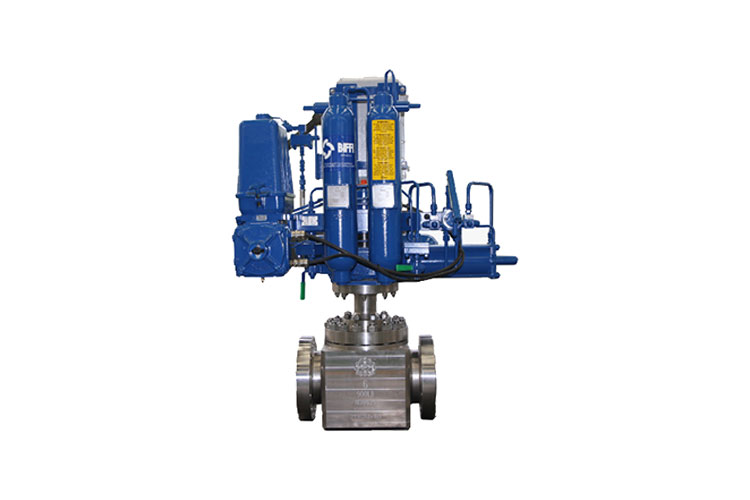
Fixed ball valve sealing technology is a core topic in modern flow control engineering. Understanding how fixed ball valves achieve reliable sealing performance is essential for engineers, buyers, maintenance teams, and technical content managers who want highly optimized, SEO‑friendly technical pages. This guide explains fixed ball valve sealing technology in clear, detailed English, with keyword‑rich sections and structured content suitable for blogs, category pages, and industrial landing pages.
A fixed ball valve, also known as a trunnion Mounted Ball valve, is a type of ball valve in which the ball is mechanically supported at the top and bottom by trunnions or journals, rather than being freely floating between the valve seats. The ball itself does not move axially under differential pressure. Instead, the seats are spring‑loaded or pressure‑assisted to move towards the ball to create a tight seal.
In fixed ball valve sealing technology, the sealing force is generated mainly by the movement of the seats, not by shifting the ball. This design provides excellent sealing performance for large diameter, high pressure, and critical service applications such as oil & gas pipelines, petrochemical processing, refining, and power generation.
To understand fixed ball valve sealing technology, it is important to compare it with the more common floating ball valve design. The table below summarizes the main differences relevant to sealing performance and application selection.
| Feature | Fixed Ball Valve (Trunnion Mounted) | Floating Ball Valve |
|---|---|---|
| Ball Support | Ball is fixed by trunnions at top and bottom | Ball is held between seats, free to move axially |
| Sealing Mechanism | Seats move towards fixed ball; spring or pressure energized | Line pressure pushes ball against downstream seat |
| Typical Size Range | Medium to very large diameters (up to 60" or more) | Small to medium diameters |
| Pressure Classes | High pressure (Class 600, 900, 1500, 2500) | Low to medium pressure (Class 150, 300, 600) |
| Operating Torque | Lower, more stable; suitable for gear or actuator operation | Higher torque at high pressure due to seat load |
| Seat Wear | Reduced localized seat wear due to balanced forces | Higher wear on downstream seat |
| Typical Applications | Pipelines, trunk lines, high pressure process lines | General service, utilities, lower pressure processes |
| Double Block and Bleed Capability | Easily achievable with independent seat design | More limited, application‑dependent |
Fixed ball valve sealing technology relies on a set of dedicated components engineered to control leakage, handle pressure, and maintain tight shutoff under varying operating conditions. Key components include:
The ball in a fixed ball valve is machined with high precision and is supported by trunnions. It rotates to open or close the flow path, but does not shift in the axial direction to create the seal. The sealing interface between the ball and the seats is usually spherical, with a finely finished surface to ensure tight contact. Advanced fixed ball valve sealing technology may use hard facing, chrome plating, tungsten carbide, or other coatings to improve wear and corrosion resistance.
Trunnions are the mechanical supports that hold the ball in place. The lower trunnion is usually integrated with or connected to the ball, while the upper trunnion connects to the stem or is part of the stem. Bearings or bushings are often installed around the trunnions to reduce friction and to maintain precise alignment. Reliable trunnion design is essential for maintaining consistent sealing contact between the ball and the seats in high pressure fixed ball valves.
Seat assemblies are at the heart of fixed ball valve sealing technology. Instead of the ball moving into the seats, the seats move towards the ball. Two main principles are used:
Seat assemblies can be uni‑directional or bi‑directional, depending on whether they are designed to seal only in one flow direction or in both directions. Many fixed ball valves incorporate two independent seat assemblies to achieve double block and bleed capability.
Seat inserts form the primary sealing interface against the ball. They can be made from:
The choice of seat material is central to fixed ball valve sealing performance, affecting temperature limits, chemical resistance, fire safety, and tightness class (e.g., ISO 5208 leakage rates).
In addition to ball‑to‑seat sealing, fixed ball valve sealing technology must also cover body‑to‑body joint sealing and body‑to‑end connection sealing. Metal gaskets, spiral wound gaskets, or O‑rings may be used depending on the pressure class and design. Proper body sealing prevents external leakage and maintains internal pressure containment.
The stem passes through the pressure boundary and must be sealed to prevent stem leakage. Typical stem sealing technologies include:
In a fixed ball valve, maintaining strict stem sealing is as important as ball‑to‑seat sealing, especially in applications requiring low fugitive emissions.
Fire‑safe fixed ball valve sealing technology ensures that the valve can still limit leakage after exposure to a fire. When soft seats or O‑rings are destroyed by high temperature, metal‑to‑metal contact surfaces provide a secondary sealing barrier. Fire‑safe designs are typically qualified according to standards such as API 607 and ISO 10497.
Fixed ball valve sealing technology can be classified by the type of sealing elements and design philosophy used. Each sealing type has unique advantages and application areas.
Soft seated fixed ball valves use non‑metallic seat inserts that provide very tight shutoff (often bubble‑tight). Common soft seat materials include:
Soft seats are widely used in:
Soft seated fixed ball valve sealing technology is sensitive to high temperature, abrasive particles, and aggressive chemical attack. For severe service, metal‑seated or hybrid designs are preferred.
Metal seated fixed ball valves use metal‑to‑metal contact between the ball and seats. This design is suitable for:
Advanced metal‑seated fixed ball valve sealing technology often incorporates:
While metal seated designs typically allow very low leakage, they may not always reach bubble‑tight performance in the same way as soft seats. However, they offer extended service life under severe conditions.
Hybrid fixed ball valve sealing technology combines soft and metal elements. Common configurations include:
Hybrid designs aim to offer both bubble‑tight shutoff under normal conditions and reliable sealing after fire or in emergency scenarios.
The sealing function in a fixed ball valve can be divided into several operating stages.
When the valve is closed (ball bore perpendicular to the pipeline):
In high pressure service, pressure‑energized seat designs automatically increase the seat‑to‑ball contact force as line pressure rises, improving sealing reliability.
When the valve opens (ball bore aligned with the pipeline):
Fixed ball valve sealing technology often uses low friction materials and carefully polished ball surfaces to ensure smooth operation and low torque.
In trunnion mounted fixed ball valves, the space between the two seats can trap fluid when the valve is closed. Thermal expansion or fluid decomposition may cause cavity overpressure. To address this, self‑relieving seats or pressure relief valves are used:
This feature is an important aspect of safe fixed ball valve sealing technology and is often required for pipeline and hydrocarbon services.
Fixed ball valve sealing performance is evaluated according to industry standards and measurable parameters. Typical standards and criteria include:
Important performance parameters in fixed ball valve sealing technology include:
Choosing a fixed ball valve with advanced sealing technology provides multiple technical and operational benefits.
Because the ball is supported by trunnions, sealing forces are not limited by the ability of the ball to float. This enables:
In fixed ball valve sealing technology, the seat load is balanced more effectively, reducing friction between the ball and seats. The result is:
Fixed ball valves typically distribute loads more evenly across both seats and minimize seat deformation. Benefits include:
Many fixed ball valves are designed to provide double block and bleed capability:
Fixed ball valve sealing technology supports a wide portfolio of designs:
This versatility allows the same basic trunnion valve platform to be customized for many different industries and media.
While fixed ball valve sealing technology offers many advantages, it is important to consider certain limitations and design factors:
In many high pressure or critical applications, the superior performance and lower lifetime cost of fixed ball valves outweigh the higher upfront investment.
Selection of sealing materials is crucial for the performance of fixed ball valve sealing technology. The following table summarizes common materials and their general characteristics.
| Component | Material Type | Typical Properties | Typical Applications |
|---|---|---|---|
| Seat Insert | PTFE / RPTFE | Excellent chemical resistance, low friction, limited temperature range | General service, low to medium temperature, clean fluids |
| Seat Insert | PEEK | High temperature capability, good strength, chemical resistance | Higher temperature hydrocarbon service, moderate abrasives |
| Seat Ring | Stainless steel with hard facing | High hardness, wear resistance, suitable for metal‑to‑metal seal | High temperature, abrasive media, severe service |
| Ball | Stainless steel, alloy steel, hard‑coated | Corrosion resistance, strength, surface hardness | High pressure, corrosive fluids, sour service (with proper alloys) |
| Stem Packing | Graphite | High temperature, fire resistance, low permeability | Steam, high temperature hydrocarbon, fire‑safe designs |
| Stem Packing | PTFE based | Low friction, chemical resistance, limited temperature | General chemical service, low emission valves |
| Body Gasket | Spiral wound (metal + filler) | High pressure & temperature resistance | Pipeline, refinery, power generation |
Manufacturers use a variety of design features to boost the performance of fixed ball valve sealing technology:
These design features support consistent sealing performance over thousands of open‑close cycles.
Fixed ball valve sealing technology is applied across a wide range of sizes, pressure classes, and material combinations. The following table gives a generalized overview of typical specification ranges. Actual values depend on specific standards and product design.
| Parameter | Typical Range | Comments |
|---|---|---|
| Nominal Size (DN / NPS) | DN 50 – DN 1500 (NPS 2" – 60") | Smaller or larger sizes are possible for special designs |
| Pressure Class | Class 150 – Class 2500 | Per ASME B16.34 and similar standards |
| Body Materials | Carbon steel, low temperature steel, stainless steel, alloy steel | Selection depends on pressure, temperature, and media |
| Seat Type | Soft seat, metal seat, hybrid seat | Chosen according to sealing requirements and service conditions |
| Temperature Range | Approx. −196 °C to +600 °C (depending on materials) | Cryogenic service and high temperature service require special design |
| End Connections | Flanged, butt weld, socket weld, threaded | Pipeline valves typically use flanged or butt weld ends |
| Operation | Lever, gearbox, electric actuator, pneumatic actuator, hydraulic actuator | Large and high pressure valves usually use gear or actuator operation |
| Sealing Performance | Bubble‑tight (soft seat) or low leakage (metal seat) | Tested according to API 598, API 6D, ISO 5208 |
| Fire‑Safe Design | Available as an option | Qualified to API 607, ISO 10497 or similar standards |
Due to its robust sealing performance, fixed ball valve technology is applied in a wide range of industries:
In many of these applications, fixed ball valve sealing technology is chosen for its ability to provide reliable isolation, low fugitive emissions, and secure shutdown in emergency conditions.
Correct installation and regular maintenance are essential for preserving the performance of fixed ball valve sealing technology over the valve’s service life.
Adhering to recommended maintenance practices supports consistent fixed ball valve sealing performance and extends the valve’s operational life.
The development of fixed ball valve sealing technology continues as industries demand higher reliability, lower emissions, and lower total cost of ownership. Some emerging trends include:
These innovations further increase the reliability and safety of fixed ball valve sealing in demanding applications.
Fixed ball valve sealing technology, often referred to as trunnion mounted ball valve sealing, provides a high performance solution for pipeline isolation and industrial flow control. By supporting the ball on trunnions and using movable, spring‑loaded or pressure‑energized seats, fixed ball valves achieve reliable sealing across a wide range of pressures, temperatures, and media types. Soft seated, metal seated, and hybrid sealing designs are available to match specific service conditions, from clean, low temperature fluids to high temperature, abrasive, and corrosive environments.
Engineers and specifiers choose fixed ball valve sealing technology for its lower operating torque, large size capability, double block and bleed functionality, and compatibility with fire‑safe and low emission requirements. When properly installed and maintained, fixed ball valves deliver long‑term tight shutoff and safety performance in oil & gas pipelines, refining, petrochemical plants, power generation, and many other industries. A clear understanding of fixed ball valve sealing components, materials, performance standards, and application limits allows users to specify the right valve solution for their critical service needs.
شخص رابط: مکس.سونگ (سونگشان)
عنوان: مدیر کل
موبایل: +86 15611322632
تلفن: +86 10 89282693
ایمیل: international@bvmc.com
آدرس: پلاک ۳، جاده لوهای، شهر پانگژوانگ، منطقه داکسینگ، پکن


حق چاپ © Beijing Valve Factory Co., Ltd
نقشه سایتاین وب سایت از کوکی ها استفاده می کند تا اطمینان حاصل شود که بهترین تجربه را در وب سایت ما به دست می آورید.




 Phone