Fixed Ball Valve Installation Mistakes to Avoid: Complete Guide
Fixed Ball Valve Installation Mistakes to Avoid: Complete Technical Guide
Fixed ball valves are a critical component in modern piping systems, especially in high‑pressure and large‑diameter applications.
However, many operational issues originate not from design flaws but from incorrect installation.
Understanding fixed ball valve installation mistakes to avoid is essential for engineers, contractors, maintenance teams, and plant operators who want reliable, leak‑free, and long‑lasting performance.
- definition”>What Is a Fixed Ball Valve?
working-principle”>Working Principle of a Fixed (Trunnion Mounted) Ball Valve
advantages”>Key Advantages of Fixed Ball Valves
applications”>Typical Applications and Service Conditions
specifications”>Typical Technical Specifications
preparation”>Pre‑Installation Preparation
common-mistakes”>Top Fixed Ball Valve Installation Mistakes to Avoid
orientation”>Orientation, Support, and Piping Alignment
actuation”>Actuator Mounting and Torque Considerations
testing”>Pressure Testing and Commissioning
maintenance”>Post‑Installation Maintenance Best Practices
checklist”>Installation Checklist (Summary Table)
faq”>FAQ: Fixed Ball Valve Installation Questions
What Is a Fixed Ball Valve?
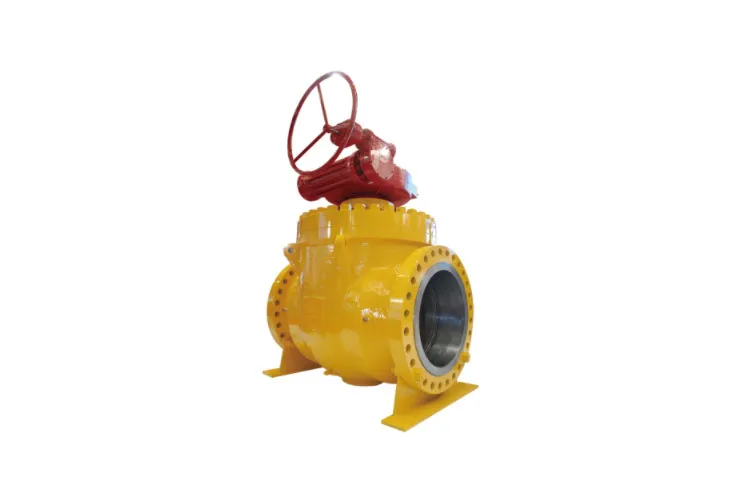
A fixed ball valve, often called a trunnion Mounted Ball valve, is a quarter‑turn shut‑off valve in which the ball is
mechanically supported at both the top and bottom by trunnions (stub shafts or bearings).
Unlike a Floating ball valve, where the ball is free to move slightly downstream to press against the seat,
the ball in a fixed ball valve is held firmly in position and the seats are spring‑loaded or pressure‑energized against the ball.
Key Identification Features
- Ball is supported by upper and lower trunnions.
- Seats are usually spring‑loaded and/or pressure‑assisted to maintain sealing.
- Suitable for large diameters and high pressures.
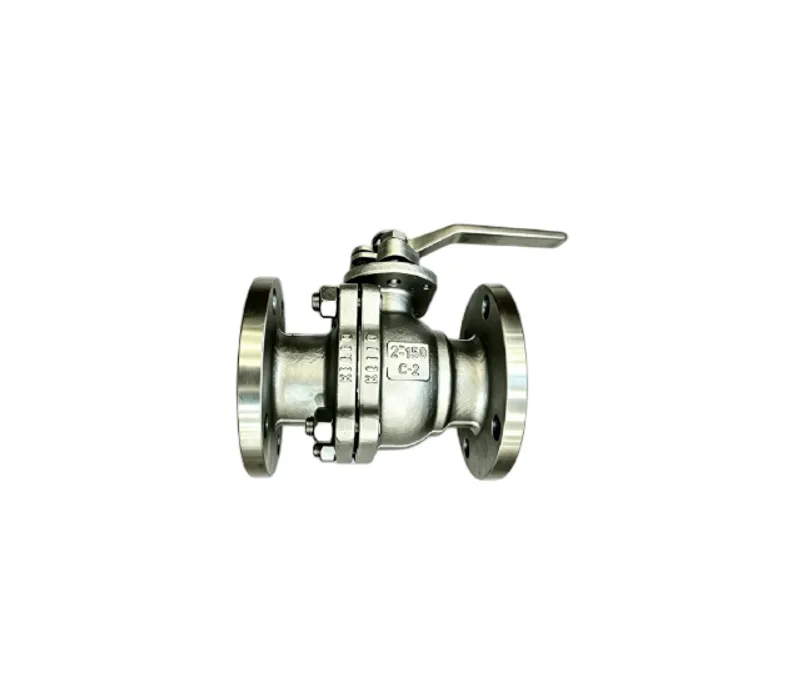
- Often available in two‑piece or three‑piece body constructions.
- Designed for low operating torque compared to floating ball valves of similar size and rating.
Because of their robust support system, fixed ball valves are the preferred choice in many critical industries,
including oil and gas transmission, petrochemical processing, power generation, and high‑pressure process piping.
Working Principle of a Fixed (Trunnion Mounted) Ball Valve
The basic working principle of a fixed ball valve is similar to any ball valve:
a spherical closure element (the ball) rotates 90 degrees to open or close the flow path.
However, the load distribution and sealing mechanism are significantly different from a floating ball design.
Components Influencing Installation
- Body – The pressure‑containing shell; may be cast or forged, two‑piece or three‑piece.
- Ball – Trunnion mounted, often with a stem at the top and trunnion at the bottom.
- Seats – Typically spring‑loaded, may feature soft inserts (PTFE, RTFE, PEEK) or metal‑to‑metal sealing.
- Trunnion – Provides support to the ball at the bottom (and sometimes top), reducing load on seats.
- Stem and Gland Packing – Ensure stem sealing; sensitive to incorrect torque and misalignment.
- Actuator or Lever – Provides mechanical motion; can be manual, pneumatic, hydraulic, or electric.
Because the ball is supported by trunnions, line pressure acts primarily on the seats, not on the ball itself.
During installation, incorrect piping alignment or excessive loads can shift this balance and cause
seat damage, leakage, and operating problems.
That is why understanding fixed ball valve installation mistakes to avoid is crucial for long‑term reliability.
Key Advantages of Fixed Ball Valves
Correctly installed fixed ball valves offer multiple performance and safety advantages over alternative valve types.
These advantages are a major reason why fixed ball valves are widely used in demanding industrial service.
Main Benefits
- Low Operating Torque – Support from trunnions reduces friction on seats, enabling smaller actuators.
- High Pressure Capability – Robust design suitable for high‑pressure systems (often up to Class 2500 in some designs).
- Large Diameter Suitability – Ideal for medium to very large line sizes.
- Bidirectional or Unidirectional Sealing – Designed for tight shut‑off in one or both directions (verify with manufacturer datasheet).
- Long Service Life – When installed correctly, fixed ball valves can offer extended cycles with minimal maintenance.
- Automation Friendly – Easy to integrate with pneumatic, hydraulic, or electric actuators.
- Bubble‑Tight Shut‑off – In soft‑seated configurations, excellent sealing for many media.
These advantages are only fully realized when correct installation procedures are followed.
Many of the most expensive failures are directly related to installation errors,
such as improper support, poor alignment, or incorrect torque on bolts and actuators.
Typical Applications and Service Conditions
Fixed ball valves are used in a wide range of industries where high reliability, tight shut‑off,
and frequent operation are required.
The same applications that benefit from fixed ball valves are also the environments where
installation mistakes can be the most costly.
Common Industries
- Oil and gas transmission and distribution
- Upstream and downstream hydrocarbon processing
- Chemical and petrochemical plants
- Refineries and gas processing facilities
- Power generation (including combined cycle and thermal plants)
- Pipeline and terminal systems
- Industrial process water, cooling water, and utilities
- High‑pressure steam and condensate systems (with appropriate design)
Typical Service Conditions
Depending on design, materials, and seat configuration, fixed ball valves can handle:
- Wide temperature ranges (cryogenic to high temperature, depending on materials).
- Corrosive or erosive media with proper material selection.
- High differential pressures and rapid cycling operations.
- Emergency shut‑down (ESD) and safety‑critical functions.
In all of these conditions, installation quality directly affects valve performance.
Avoiding fixed ball valve installation mistakes is therefore not just a quality issue, but a
safety and reliability requirement.
Typical Technical Specifications for Fixed Ball Valves
The following table provides a generalized overview of typical fixed ball valve specifications.
Exact data will vary depending on the design standard, manufacturer, and application.
Use this table as a reference when planning installation and when assessing compatibility with piping systems.
Parameter |
Typical Range / Description |
Installation Impact |
Valve Type |
Fixed (Trunnion Mounted) Ball Valve |
Requires support and alignment to protect trunnions and seats. |
Nominal Sizes |
DN 50 – DN 1200 (2" – 48" and larger) |
Larger sizes require special rigging, supports, and handling. |
Pressure Ratings |
ANSI / ASME Class 150 – 2500 (or equivalent PN ratings) |
High pressure requires strict adherence to bolt torque and gasket selection. |
Body Materials |
Carbon steel, low alloy steel, stainless steel, duplex, special alloys |
Material affects weight, corrosion protection, and welding procedures. |
Seat Types |
Soft‑seated (PTFE, RTFE, PEEK) or metal‑seated |
Soft seats require more cautious handling and protection from debris. |
End Connections |
Flanged (RF, RTJ), Butt‑weld, Socket‑weld, Threaded |
End type defines installation method, alignment control, and testing steps. |
Design Standards |
API 6D, ASME B16.34, ISO standards, etc. |
Define pressure‑temperature limits, testing, and documentation requirements. |
Face‑to‑Face Dimensions |
As per ASME B16.10 or ISO 5752 (typical) |
Must match piping layout drawings; errors cause misalignment. |
Operations |
Manual lever, gear operator, pneumatic, hydraulic, electric actuator |
Actuation affects mounting orientation, torque, and power requirements. |
Leakage Class |
Typically API 598, ISO 5208, or API 6D requirements |
Improper installation often leads to failure to meet leakage class. |
Fire‑Safe Design |
Optional, tested to API 607 or ISO fire‑safe standards |
Requires proper installation of gaskets and fire‑safe components. |
Antistatic and Blowout‑Proof Stem |
Common for industrial fixed ball valves |
Protection can be compromised by incorrect stem packing adjustments. |
Using these typical parameters, engineers can plan installation strategies
that minimize common fixed ball valve installation mistakes and optimize system performance.
Pre‑Installation Preparation
Many fixed ball valve installation mistakes originate before the valve ever reaches the pipeline.
Proper pre‑installation preparation greatly reduces the chance of seat damage, misalignment, and operational failures.
1. Documentation and Design Review
2. Handling and Storage
3. Inspection Prior to Installation
These preparation steps help avoid common mistakes such as installing the wrong valve,
damaging seats due to debris, or misaligning piping due to incorrect dimensions.
Top Fixed Ball Valve Installation Mistakes to Avoid
The following section outlines the most frequent fixed ball valve installation mistakes to avoid, along with
explanations of why they are problematic and how to prevent them.
Each mistake can lead to leakage, premature wear, operational difficulty, or even hazardous failure.
1. Ignoring Valve Orientation and Flow Direction
Many fixed ball valves are designed for specific flow direction,
particularly those with single piston effect (SPE) or specialized seat designs.
Installing such valves in reverse orientation can cause:
- Inadequate seat loading on the upstream or downstream side.
- Difficulty in achieving specified tight shut‑off.
- Unexpected pressure build‑up in the body cavity.
Always check flow direction arrows and documentation.
If the valve is truly bidirectional, this will typically be stated on the nameplate or in the manual.
When in doubt, consult the technical documentation before installation.
2. Misalignment of Piping and Valve Ends
A very common fixed ball valve installation mistake is to use the valve itself as a lever to force misaligned pipe ends together.
This imposes high mechanical loads on the body, trunnions, and seats, leading to:
- Distortion of the valve body and internal components.
- Increased operating torque or stuck operation.
- Loss of sealing performance and potential leakage.
Piping must be properly aligned and supported before the valve is installed.
The valve should not be used to correct misalignment or compensate for incorrect pipe cutting.
3. Applying Excessive Force on the Actuator or Lever
Using the hand lever or actuator as a lever arm for lifting or alignment is a serious mistake.
It can cause:
- Bending of the stem or actuator shaft.
- Damage to stem sealing and packing.
- Misalignment between the stem and trunnion.
Lifting and handling must be done using designed lifting points on the body, lugs, or flanges.
The actuating mechanism is not a structural lifting element.
4. Over‑Tightening or Uneven Tightening of Flange Bolts
Incorrect bolt tightening is one of the leading fixed ball valve installation mistakes to avoid.
Over‑tightening or uneven tightening can cause:
- Distortion of the valve body or flanges.
- Gasket failure and leakage.
- Unbalanced loading on the seats, resulting in increased torque and wear.
Always use:
- The recommended torque values for flange bolts (from gasket and flange standards or engineering calculations).
- A cross‑pattern tightening sequence to ensure uniform compression.
- Calibrated torque wrenches or hydraulic tensioning tools for critical joints.
5. Welding with the Valve Installed (When Not Allowed)
For butt‑weld or socket‑weld fixed ball valves, welding is sometimes performed with the valve in place.
If the design is not qualified for this, common issues include:
- Heat damage to soft seats and internal seals.
- Distortion of the body due to thermal stress.
- Contamination of internal cavity with welding slag and spatter.
Unless specifically designed and documented for in‑line welding,
do not weld with the valve assembled.
Use recommended procedures such as:
- Removing the internal trim before welding (for certain three‑piece designs).
- Applying proper heat sinking and complying with preheat/post‑weld heat treatment requirements.
6. Failure to Clean Piping Before Installation
Installing a fixed ball valve into dirty or debris‑filled piping is a frequent mistake that causes:
- Scoring or scratching of the ball and seats.
- Inability to achieve tight shut‑off on initial operation.
- Accelerated wear and potential jamming of the ball.
Prior to installation:
- Thoroughly flush and clean the piping system.
- Remove welding slag, rust, sand, scaling, and foreign objects.
- Consider installing temporary strainers upstream during commissioning.
7. Installing Without Adequate Support for Large Valves
Large fixed ball valves are heavy.
A common installation error is to rely solely on the connecting pipe for support.
This can lead to:
- Excessive bending stress on the valve body and trunnions.
- Misalignment of the ball and seats over time.
- Flange distortion and leakage under thermal or mechanical loads.
Use dedicated pipe supports or valve supports under the valve,
especially for large diameters or in high‑vibration environments.
8. Ignoring Thermal Expansion and Piping Flexibility
In systems with temperature changes, thermal expansion of the pipeline can impose loads on the valve.
Common mistakes include:
- Rigidly fixing the valve between two immovable points.
- Failing to incorporate expansion joints or flexible loops.
- Ignoring thermal movements during support and guide design.
Such mistakes cause additional stresses on the fixed ball valve,
potentially leading to seat deformation, misalignment, and leakage.
Always coordinate installation with a piping flexibility analysis when applicable.
9. Incorrect Mounting of Actuators
Actuator installation is another area where fixed ball valve installation mistakes are common.
Misalignment between the actuator and the valve stem can cause:
- Excessive stem side loads and packing wear.
- Increased operating torque and uneven seat loading.
- Premature actuator and valve failure.
Follow actuator mounting procedures carefully, including:
- Aligning the drive square or key correctly.
- Using the specified mounting bracket and coupling.
- Verifying that fully open and fully closed positions are correctly set and do not over‑travel.
10. Incorrect Stem Packing Adjustment
Over‑tightening stem packing is a frequent mistake that leads to:
- Excessive operating torque.
- Accelerated wear of the stem and packing rings.
- Difficulty in achieving full stroke, affecting sealing.
Under‑tightening results in stem leakage.
Always follow manufacturer torque recommendations and use proper tools.
After initial operation and thermal cycles, re‑check packing and adjust only as needed.
11. Inadequate Venting and Draining
Some fixed ball valves are equipped with body bleed, drain, or vent ports.
Ignoring these during installation and commissioning can cause:
- Trapped pressure in the body cavity.
- Unsafe conditions during maintenance or disassembly.
- Inaccurate pressure testing results.
Ensure that all vents, drains, and bleed valves are properly connected or capped as specified,
and that personnel understand their function during operation and maintenance.
12. Skipping or Shortening Pressure Testing Procedures
Another critical fixed ball valve installation mistake to avoid is inadequate field testing.
Skipping recommended hydrostatic and leak tests leads to:
- Undetected leaks at flanges, body joints, or stem packing.
- Operational problems only discovered after the system is fully commissioned.
- Higher cost and complexity of corrective actions later.
Follow the applicable testing standards (API, ISO, or project‑specific) and document results.
If anomalies are found, correct them before putting the valve into service.
13. Operating the Valve Against Manufacturer Limitations
Some fixed ball valves are not designed for throttling service or for certain media conditions.
Using them outside their design limits can cause:
- Seat erosion due to high velocity across a partially open ball.
- Cavitation or flashing damage in high ΔP service.
- Thermal shock or compatibility issues with specific fluids.
Installation and commissioning teams must understand the intended operating mode
of the valve and ensure that control systems and operators use it correctly.
Orientation, Support, and Piping Alignment
Proper orientation and mechanical support are essential for avoiding fixed ball valve installation mistakes.
Improper support and alignment can negate all design advantages of a trunnion mounted ball valve.
Recommended Orientation
Piping Alignment Guidelines
- Bring pipe flanges into coaxial alignment before inserting the valve.
- Check that the gap between flanges matches the valve face‑to‑face dimension.
- Use spreader tools and temporary supports if needed, without applying force to the valve.
Support and Anchoring
- Install dedicated supports for large or heavy valves to relieve loads on pipe and flanges.
- Use guides and anchors in accordance with piping stress calculations.
- Consider vibration, thermal expansion, and potential impact loads during support design.
Correct alignment and support significantly reduce the risk of seat damage, stem problems, and body distortion —
three of the most common fixed ball valve installation mistakes to avoid.
Actuator Mounting and Torque Considerations
Fixed ball valves are often automated.
Incorrect actuator selection and mounting are major sources of operational issues and failures.
Actuator Sizing
- Base actuator torque on maximum differential pressure,
media characteristics, and safety factors defined in engineering standards.
- Consider breakaway torque, running torque, and seating or unseating torque.
- Avoid undersizing, which can cause incomplete operation, or excessive oversizing,
which may overload internal components.
Mounting Alignment
- Use the specified ISO mounting pad, bracket, and coupling.
- Check that the actuator output shaft is aligned with the valve stem without side loading.
- Verify the open/closed travel stops are correctly set to prevent over‑rotation.
Control and Feedback
- Install limit switches or position transmitters as required.
- Confirm that control signals correspond to the correct valve position (e.g., 0% = closed, 100% = open).
- Perform functional tests under no‑flow conditions before introducing process fluid.
Proper actuator selection and mounting minimize the risk of another frequent fixed ball valve installation mistake:
operational failure due to incorrect torque or misaligned actuation.
Pressure Testing and Commissioning
Commissioning is the final opportunity to detect installation issues and correct fixed ball valve installation mistakes
before the system is put into full operation.
Hydrostatic Testing
- Perform body and seat tests in accordance with applicable standards (API 6D, API 598, ISO, or project specs).
- Gradually raise pressure to test level and hold for the specified duration.
- Check for leaks at flanges, body joints, stem packing, and drain/vent points.
Functional Testing
- Cycle the valve fully open and closed multiple times under no‑flow or low‑pressure conditions.
- Confirm smooth operation and that actuator indication matches actual ball position.
- Measure and record operating torque, where applicable, to establish baseline values.
Flushing and Cleaning After Installation
Documenting all testing and commissioning results provides valuable reference information
for future maintenance and troubleshooting.
Post‑Installation Maintenance Best Practices
Even with perfect installation, fixed ball valves require periodic inspection and maintenance.
Many long‑term issues can be traced back to early fixed ball valve installation mistakes that were never corrected.
Routine Inspections
- Visually check for external leakage at flanges, body joints, and stem packing.
- Monitor actuator performance, response time, and any unusual noises or vibrations.
- Inspect supports and surrounding piping for signs of settlement or misalignment.
Operational Checks
- Periodically cycle valves that are not frequently operated, according to plant procedures.
- Verify that indicator positions are accurate and that control signals function correctly.
- Record torque or power requirements for comparison with original commissioning values.
Packing and Seal Maintenance
- Adjust stem packing only when necessary to correct minor leakage.
- Avoid over‑tightening during routine checks.
- Plan for scheduled overhaul of seals and seats in high‑cycle or severe service.
Effective maintenance completes the life‑cycle management of fixed ball valves
and helps catch any lingering consequences of earlier installation errors.
Installation Checklist: Fixed Ball Valve Installation Mistakes to Avoid
The following checklist summarizes key points to help engineers and technicians
avoid common fixed ball valve installation mistakes.
It can be used as a quick reference during installation and commissioning.
Step |
Check Item |
Objective |
Common Mistake to Avoid |
1 |
Verify valve model, size, and rating |
Ensure correct valve for the service |
Installing wrong class or material in critical service |
2 |
Confirm flow direction and orientation |
Maintain design sealing performance |
Reversing unidirectional valves or ignoring arrows |
3 |
Inspect for shipping damage and debris |
Protect seats and internal components |
Installing valves with foreign material inside |
4 |
Align piping before positioning valve |
Prevent mechanical stress on body and trunnions |
Using valve as a tool to pull pipe into alignment |
5 |
Use correct lifting methods |
Avoid damage to actuator and stem |
Lifting by lever, stem, or actuator housing |
6 |
Apply proper flange bolt torque sequence |
Ensure tight, uniform sealing |
Over‑tightening or uneven bolt loading |
7 |
Provide adequate valve support |
Reduce load on flanges and piping |
Allowing large valves to hang unsupported |
8 |
Respect welding instructions |
Protect seats and seals from heat |
Welding on assembled valves without qualification |
9 |
Mount actuator correctly and align shaft |
Ensure smooth and reliable actuation |
Forcing misaligned coupling or skipping travel stop settings |
10 |
Adjust stem packing per specification |
Prevent leakage and excessive torque |
Over‑tightening packing at installation |
11 |
Perform hydrostatic and functional tests |
Verify leak tightness and operation |
Skipping or shortening field testing |
12 |
Record baseline performance data |
Support future troubleshooting and maintenance |
Failing to document torque, leakage, and alignment results |
FAQ: Fixed Ball Valve Installation Questions
1. Can a fixed (trunnion mounted) ball valve be installed in any orientation?
Many fixed ball valves can be installed in horizontal or vertical piping.
However, always check the manufacturer’s documentation for orientation limitations,
especially regarding flow direction, solids content, and actuator position.
Some designs may favor certain orientations to ensure optimal seat loading and drainage.
2. What is the most common fixed ball valve installation mistake to avoid?
One of the most common mistakes is using the valve to correct misaligned piping.
This practice introduces high mechanical loads and distortion,
leading to premature seat failure, stuck operation, and leakage.
Proper piping alignment before valve insertion is essential.
3. Should the valve be open or closed during installation?
The recommended position depends on the valve design and installation method.
For flanged connections, many valves are installed in the closed position
to protect seats from damage. For welding, special instructions may specify a particular position.
Always follow the specific instructions from the valve documentation.
4. How can I protect soft seats during installation and testing?
To protect soft seats:
- Keep end covers in place until just before installation.
- Thoroughly clean and flush the piping system.
- Avoid high‑velocity flow across a partially open valve during flushing.
- Follow recommended pressure testing procedures with controlled pressurization rates.
5. Can fixed ball valves be used for throttling?
Fixed ball valves are primarily designed for on/off service.
Some special designs may allow limited throttling, but many standard trunnion mounted designs are not suitable for continuous control service.
Throttling outside design limits can cause seat erosion, high noise, and cavitation damage.
Always confirm the intended service with design documentation.
6. Why is actuator alignment so critical on fixed ball valves?
In a fixed ball valve, the ball is firmly supported, and stem forces are transmitted through the trunnion system.
A misaligned actuator introduces side loads on the stem and bearings,
leading to higher torque, leakage at stem packing, and wear on seats and trunnions.
Precise alignment and correct mounting hardware are essential for reliable performance.
7. How often should packing be adjusted after installation?
Packing should only be adjusted when necessary to correct minor leakage or after significant thermal cycling.
Frequent over‑adjustment is a common mistake that increases friction and wear.
Follow the manufacturer’s guidelines and use torque values where provided.
Fixed ball valves offer excellent shut‑off capability, high pressure and temperature handling,
and long service life when installed correctly.
Most operational problems originate from avoidable installation errors.
By understanding the most important fixed ball valve installation mistakes to avoid — including
misalignment, improper support, incorrect torque, poor cleaning, and actuator mis‑mounting —
engineers and technicians can significantly increase the reliability, safety, and efficiency of their piping systems.
Using the guidelines, specification tables, and installation checklist in this guide,
project teams can standardize best practices and reduce the risk of costly downtime or failures
in critical industrial applications.
“`






 Phone