

trunnion Mounted Ball Valve Structure and Components
A trunnion mounted ball valve is one of the most widely used isolation valve designs in
oil and gas, petrochemical, pipeline transmission, power generation, water treatment, and other demanding
industrial applications. Known for its high-performance sealing, low operating torque, and excellent
suitability for high pressure and large diameter pipelines, the trunnion mounted ball valve structure
is designed to deliver reliable shutoff under severe service conditions.
This guide provides a comprehensive overview of trunnion mounted ball valve structure and components,
including definition, working principle, main parts, advantages, typical specifications, applications, and
selection considerations. The content is written in a clear, SEO-friendly format and can be used directly
for a blog post, category page, landing page, or industry information page.
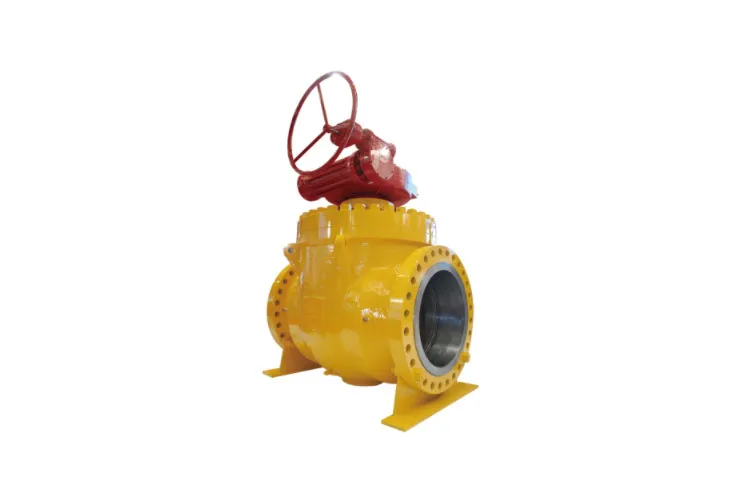
A trunnion mounted ball valve is a type of quarter-turn valve in which the ball is supported
by trunnions, or mechanical anchoring shafts, at the top and bottom. Unlike a Floating ball valve, where the
ball is held in place primarily by the seat pressure, a trunnion mounted ball valve uses a fixed ball
arrangement. The ball does not “float” downstream under pressure; instead, it remains stabilized by the
trunnion support.
This structure makes the valve especially suitable for high pressure ball valve applications,
large size pipelines, and systems requiring low operating torque. The trunnion design reduces friction between
the ball and seats, improves sealing consistency, and allows easier operation even in demanding environments.
A trunnion mounted ball valve works by rotating the ball 90 degrees to either open or close the flow path.
In the open position, the bore of the ball aligns with the pipeline, allowing fluid to pass through. In the
closed position, the solid part of the ball blocks the flow, creating a tight seal between the ball and seats.
The key difference in a trunnion mounted design is that the ball is supported by upper and lower trunnions,
which absorb the hydraulic load. When pressure acts on the ball, the seats are pushed against the ball to
improve sealing, while the ball itself remains fixed in place. This mechanism helps reduce wear and torque
during operation.
The trunnion mounted ball valve structure is engineered for durability, pressure integrity,
and efficient operation. It generally consists of several main components working together to control flow
and maintain a secure seal. Understanding these parts is important for specification, maintenance, and
application selection.
| Component | Function | Importance in Valve Performance |
|---|---|---|
| Valve Body | Contains the internal parts and provides pressure boundary | High strength and corrosion resistance are essential |
| Ball | Rotates to open or close the flow passage | Ensures tight shutoff and smooth flow control |
| Trunnion | Supports the ball at the top and bottom | Reduces torque and stabilizes the ball under pressure |
| Seats | Create sealing contact with the ball | Critical for zero or low-leakage performance |
| Stem | Transfers operating force to the ball | Provides reliable actuation and control |
| Seals and Gaskets | Prevent leakage at body joints and stem areas | Support pressure containment and long service life |
| Actuator or Lever | Provides manual or automatic operation | Improves efficiency and system integration |
The valve body is the outer shell that encloses and protects the internal components. It forms the primary
pressure boundary and must withstand system pressure, temperature variation, and mechanical stress. Common
body constructions include two-piece ball valve and three-piece ball valve
designs, depending on maintenance requirements and installation preferences.
Body materials are typically selected based on application conditions, such as carbon steel, stainless steel,
alloy steel, duplex stainless steel, or other corrosion-resistant metals. In aggressive service environments,
material selection is critical for long-term reliability.
The ball is the closure element responsible for stopping or allowing flow. It usually has a drilled bore that
matches the pipeline diameter or flow requirements. When the bore is aligned with the pipeline, the valve is
fully open. When rotated 90 degrees, the solid section of the ball blocks the flow.
The ball surface is often precision machined and coated to improve wear resistance, reduce friction, and
enhance sealing performance. In severe service ball valve applications, surface treatment can play a major
role in extending service life.
The trunnion is the defining feature of this valve type. It is a shaft or support point positioned at the
top and bottom of the ball. The trunnion carries the load generated by line pressure, preventing excessive
movement of the ball.
By stabilizing the ball, the trunnion reduces operating torque and allows the valve to function efficiently
in high pressure systems and large diameter lines. This makes the design highly suitable for pipeline valves
and critical isolation services.
The stem connects the actuator or manual operator to the ball. It transmits the turning force needed to rotate
the closure element. In most trunnion mounted ball valve designs, the stem is engineered for strength,
anti-blowout protection, and dependable torque transmission.
Stem sealing is also important. Proper stem packing and sealing prevent leakage around the stem area, which
is essential for pressure integrity and operational safety.
Seats are positioned on either side of the ball and are responsible for creating the seal when the valve
closes. In a trunnion mounted design, spring-loaded or pressure-assisted seats are often used to maintain
reliable contact with the ball.
Seat materials may include PTFE, reinforced PTFE, nylon, PEEK, metal, or other engineered materials depending
on temperature, pressure, and media compatibility. For high temperature or abrasive service, metal seated ball
valve configurations may be preferred.
Seals and gaskets are used throughout the valve to maintain tightness at body joints, stem areas, and other
interfaces. They help prevent external leakage and preserve internal pressure containment.
A well-designed sealing system is essential for the long-term performance of any industrial ball valve,
especially in applications where leakage prevention is a priority.
Trunnion mounted ball valves can be operated manually or automatically. Manual operation may use a lever or
gear operator, while automated systems may include pneumatic actuators, electric actuators, hydraulic actuators,
or gas-over-oil systems.
The choice of actuation depends on valve size, pressure rating, cycle frequency, and plant automation
requirements. Large valves or high-pressure valves often require gear operation or powered actuation to keep
operating effort manageable.
The following features make the trunnion mounted ball valve one of the most trusted solutions for demanding
service conditions:
The advantages of a trunnion mounted ball valve are closely tied to its fixed ball structure
and pressure-balanced design. These advantages make it especially valuable in industrial systems where safety,
reliability, and performance matter.
| Advantage | Description | Typical Benefit |
|---|---|---|
| Low Torque Operation | Ball is supported by trunnions, reducing friction | Easier manual operation and smaller actuators |
| Excellent Shutoff | Seat pressure is optimized for sealing | Improved leakage control |
| High Pressure Resistance | Structure handles elevated line pressure | Reliable service in pipeline systems |
| Stable Ball Position | Ball remains fixed and supported | Reduced wear and better alignment |
| Suitable for Large Sizes | Mechanical support helps manage large bore dimensions | Ideal for transmission and distribution pipelines |
| Automation Friendly | Works well with actuator packages | Easier integration into control systems |
Understanding the difference between a trunnion mounted design and a floating ball valve is important for
valve selection. Both are quarter-turn valves, but their internal structure and operating behavior are
different.
| Aspect | Trunnion Mounted Ball Valve | Floating Ball Valve |
|---|---|---|
| Ball Support | Supported by upper and lower trunnions | Ball moves slightly with line pressure |
| Operating Torque | Lower | Higher in larger sizes or higher pressure |
| Pressure Suitability | Excellent for high pressure | More common in lower pressure applications |
| Valve Size | Suitable for medium to large diameters | Often used for smaller diameters |
| Sealing Mechanism | Seat is pressed toward the fixed ball | Ball is pushed into downstream seat |
| Application Focus | Pipeline, oil and gas, critical isolation | General industrial and utility service |
The following table provides a general specification overview for trunnion mounted ball valve products. Actual
ranges may vary depending on design standard, material selection, and application requirements.
| Specification Item | Typical Range / Option |
|---|---|
| Valve Type | Trunnion mounted ball valve, full bore or reduced bore |
| Size Range | Commonly from 2 inch to 48 inch and above |
| Pressure Rating | Class 150, 300, 600, 900, 1500, 2500 |
| End Connections | Flanged, welded, butt weld, socket weld, threaded in some designs |
| Body Material | Carbon steel, stainless steel, alloy steel, duplex stainless steel |
| Seat Material | PTFE, reinforced PTFE, PEEK, nylon, metal seat |
| Temperature Range | Depends on seat and body materials, from cryogenic to high temperature service |
| Operation | Lever, gearbox, pneumatic actuator, electric actuator, hydraulic actuator |
| Flow Pattern | Full bore or reduced bore |
| Leakage Standard | Designed for tight shutoff according to applicable standards |
Material selection is a critical part of ball valve structure because each component faces different loads,
temperatures, and fluid conditions. The table below summarizes common material choices used in industrial
trunnion mounted ball valves.
| Component | Common Materials | Typical Purpose |
|---|---|---|
| Body | WCB, LCB, CF8, CF8M, alloy steel, duplex steel | Pressure containment and corrosion resistance |
| Ball | Stainless steel, chrome-plated steel, coated alloy steel | Sealing surface and flow control |
| Stem | Stainless steel, alloy steel | Torque transmission and strength |
| Seats | PTFE, RPTFE, PEEK, nylon, metal | Sealing performance and media compatibility |
| Seals | PTFE, graphite, elastomers, specialized compounds | Leak prevention and pressure integrity |
| Fasteners | Stainless steel, alloy steel | Structural clamping and assembly strength |
Trunnion mounted ball valves can be classified in several ways based on bore design, body construction, and
seat style. These variations allow the valve to meet different performance and installation needs.
The versatility of the trunnion mounted ball valve makes it a preferred solution across a wide range of
industries. Its structure is especially well suited to high integrity isolation and large flow systems.
The internal structure of a trunnion mounted ball valve directly affects performance, service life, and system
reliability. A well-designed structure provides stable operation, better pressure handling, lower actuator
requirements, and tighter sealing. In critical systems, these benefits can reduce downtime and improve
operational safety.
When comparing valve technologies, engineers often focus on torque, leakage, pressure rating, maintenance
access, and compatibility with the process fluid. The trunnion mounted ball valve structure addresses many of
these priorities by combining fixed-ball support with pressure-assisted sealing.
Selecting the right trunnion mounted ball valve requires an evaluation of operating conditions and project
requirements. Important factors include:
In high pressure pipeline service, it is also important to evaluate actuation torque, fire-safe design,
anti-static features, fugitive emission control, and emergency sealing performance where applicable.
Trunnion mounted ball valves are designed for dependable service, but routine inspection and proper maintenance
can extend performance even further. Because the ball is mechanically supported, wear is often reduced compared
with other valve types. This can result in longer intervals between maintenance shutdowns.
Maintenance benefits may include easier torque management, improved seat replacement options, and better
suitability for automated operation. Depending on the valve design, top-entry configurations can simplify
access to internal parts during servicing.
The following keyword phrases are naturally associated with this topic and may help reinforce search relevance
when used appropriately in headings, body text, image alt text, metadata, and related content blocks:
| Term | Meaning |
|---|---|
| Trunnion | A support shaft that holds the ball in fixed position |
| Quarter-turn | A valve that opens or closes with a 90-degree rotation |
| Full bore | Internal bore equal to the pipeline diameter |
| Reduced bore | Internal bore smaller than the pipeline diameter |
| Actuator | A device used to automate valve operation |
| Seat | The sealing surface that contacts the ball |
| Blowout-proof stem | Stem design that helps prevent ejection under pressure |
| Pressure-assisted sealing | Sealing that improves as line pressure increases |
The trunnion mounted ball valve structure and components make this valve type a dependable,
high-performance solution for industrial flow control and isolation. With a supported ball, low torque
operation, strong sealing performance, and excellent suitability for high pressure and large diameter
applications, the trunnion mounted ball valve remains a preferred choice in many critical systems.
Whether used in oil and gas pipelines, petrochemical plants, power systems, or water infrastructure, this
valve design offers a practical balance of reliability, durability, and operational efficiency. Understanding
the structure, components, advantages, and specifications of a trunnion mounted ball valve helps engineers,
purchasers, and project teams make informed selection decisions for long-term performance.
“`
شخص رابط: مکس.سونگ (سونگشان)
عنوان: مدیر کل
موبایل: +86 15611322632
تلفن: +86 10 89282693
ایمیل: international@bvmc.com
آدرس: پلاک ۳، جاده لوهای، شهر پانگژوانگ، منطقه داکسینگ، پکن


حق چاپ © Beijing Valve Factory Co., Ltd
نقشه سایتاین وب سایت از کوکی ها استفاده می کند تا اطمینان حاصل شود که بهترین تجربه را در وب سایت ما به دست می آورید.




 Phone