


trunnion Mounted Ball Valve Pressure Rating Explained
Trunnion mounted ball valve pressure rating is one of the most important factors to understand when selecting a valve for oil and gas, petrochemical, power generation, water treatment, pipeline transmission, and other demanding industrial applications. In simple terms, the pressure rating tells you how much internal pressure a valve can safely handle under defined operating conditions. For a trunnion mounted ball valve, pressure rating is closely related to valve size, body design, sealing structure, temperature, and industry standards such as ASME, API, and ISO.
This guide explains trunnion mounted ball valve pressure rating in clear, practical language. It covers definitions, rating classes, key design features, standards, performance advantages, specification factors, and a reference table to help readers compare common pressure classes. The content is written for SEO-friendly use in blog posts, category pages, directory pages, industrial product pages, and technical resource sections.
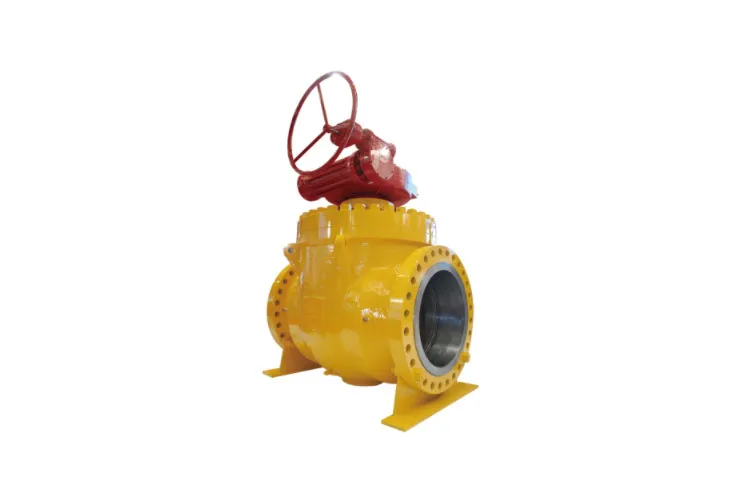
A trunnion mounted ball valve is a type of quarter-turn valve that uses a ball with a fixed support structure at the top and bottom. The ball is anchored by a trunnion, which reduces the load on the seats and improves stability under high pressure. When the valve is opened or closed, the ball rotates 90 degrees to control the flow of liquid or gas through the pipeline.
Unlike a Floating ball valve, where the ball moves slightly under pressure to press against the downstream seat, a trunnion mounted ball valve uses mechanical support to manage higher pressures and larger diameters more effectively. This makes the design especially suitable for applications where high pressure ball valve performance, low operating torque, reliable sealing, and long service life are required.
The pressure rating of a valve is the maximum allowable working pressure the valve can withstand at a specific temperature. It is usually expressed in Class ratings such as Class 150, Class 300, Class 600, Class 900, Class 1500, and Class 2500, or in metric pressure units such as PN16, PN40, PN64, PN100, and so on.
In practical terms, pressure rating helps engineers determine whether a valve is suitable for a particular pipeline or process system. A valve may be safe at one pressure level but not at another, especially when temperature changes, fluid properties, corrosion allowance, and sealing requirements are considered. For this reason, ball valve pressure rating must always be checked alongside the operating temperature and service conditions.
The pressure rating of a trunnion mounted ball valve affects safety, performance, and equipment lifespan. In high-pressure systems, a valve that is underspecified may leak, deform, or fail, causing downtime and possible hazards. A correctly rated valve helps ensure:
Because trunnion mounted ball valves are often used in critical lines, pressure rating is not just a specification item. It is a core design parameter that influences how the valve performs in real-world service.
A major reason engineers choose a trunnion mounted ball valve is its ability to handle higher pressure levels with better torque control. The trunnion supports the ball at both ends, preventing excessive movement and reducing force on the seats. This creates several advantages in high-pressure applications:
These structural advantages are the reason trunnion mounted ball valves are widely selected for high pressure pipeline valves, transmission lines, compressor stations, refining systems, and other critical industrial services.
Different industries use different naming systems for pressure rating. The most common systems are ASME/ANSI Class ratings and PN ratings. While both describe pressure capability, they are not directly interchangeable without checking the actual temperature-pressure relationship for the specific valve and standard.
| Pressure Rating System | Common Marking | Typical Use | Description |
|---|---|---|---|
| ASME / ANSI | Class 150, 300, 600, 900, 1500, 2500 | Oil & gas, petrochemical, industrial piping | Pressure class based on material and temperature according to ASME standards |
| PN / Metric | PN16, PN25, PN40, PN64, PN100, PN160 | International industrial systems, water, process industries | Nominal pressure rating commonly used in metric systems |
| API / Industry Practice | API 6D valve pressure design | Pipeline transmission systems | Pipeline valve standard focused on performance and testing |
The following table provides a general reference for common pressure classes used in trunnion mounted ball valves. Actual pressure capacity depends on valve size, body material, temperature, seat material, and applicable design standard. Always verify final ratings against the manufacturer’s certified pressure-temperature chart and project specifications.
| Pressure Class | Approximate Pressure Range | Typical Applications | General Notes |
|---|---|---|---|
| Class 150 | Low to moderate pressure | Water systems, light industrial service | Suitable for lower-pressure pipelines and general utility use |
| Class 300 | Moderate pressure | Process systems, oil and gas service | Common in many industrial applications requiring stronger pressure capability |
| Class 600 | High pressure | Refining, chemical processing, gas transmission | Popular choice for demanding service and higher stress conditions |
| Class 900 | Very high pressure | Critical process lines, high-pressure gas service | Used where stronger pressure control and sealing integrity are required |
| Class 1500 | Extremely high pressure | Severe service, high-pressure hydrocarbon systems | Designed for heavy-duty industrial applications with strict reliability needs |
| Class 2500 | Ultra-high pressure | Specialized high-pressure environments | Used in very demanding conditions where performance and safety are critical |
The pressure rating of a trunnion mounted ball valve is not determined by size alone. Several technical variables influence the final rating. Understanding these factors is essential for correct selection and safe operation.
The valve body material has a direct impact on pressure capability. Common materials include carbon steel, stainless steel, duplex stainless steel, alloy steel, and special corrosion-resistant alloys. Stronger materials generally support higher pressure ratings, but the final rating also depends on temperature and design geometry.
Larger valve sizes may have different pressure limitations than smaller valves, even within the same class rating. As valve diameter increases, stresses on the body and sealing surfaces can become more significant, which may affect the allowable pressure-temperature curve.
Pressure rating decreases or changes with temperature in many valve designs. A valve that is rated for a certain pressure at ambient temperature may have a lower allowable pressure at elevated temperatures. This is why engineers always review pressure-temperature charts before final selection.
Seat design and seat material influence sealing performance and pressure capability. Soft seats may provide excellent sealing but can have temperature limits, while metal seats are often used in severe service and higher temperatures. In a trunnion mounted ball valve, the seat system is an important part of maintaining pressure tightness.
Flanged, welded, threaded, and butt-weld connections each have different performance characteristics. For high-pressure service, welded ends or high-integrity flanged connections may be preferred depending on the application.
Standards such as API 6D, API 608, ASME B16.34, and ISO 17292 define pressure testing, design requirements, and performance criteria. Compliance with these standards helps ensure the valve can withstand the intended operating conditions.
A common mistake is to assume that the valve pressure rating equals the exact operating pressure. In reality, pressure rating is the maximum allowable limit under specified conditions, while working pressure is the actual pressure present during normal operation. A safe valve selection usually requires a margin between the two.
| Term | Meaning | Example |
|---|---|---|
| Pressure Rating | Maximum allowable pressure under defined conditions | Valve rated for Class 600 |
| Working Pressure | Actual pressure during operation | Pipeline operates at 250 psi |
| Test Pressure | Pressure used for testing body or seat integrity | Hydrostatic test during factory inspection |
For best practice, the selected trunnion mounted ball valve should exceed normal operating pressure requirements and also remain suitable across the expected temperature range, transient pressure spikes, and system upsets.
Trunnion mounted ball valves offer several benefits that make them ideal for high-pressure service and critical isolation applications.
Since the ball is supported by the trunnion, friction and operating force are reduced. This is especially valuable in large diameter and high-pressure systems, where manual operation may be difficult and actuated operation is preferred.
The design provides strong sealing performance with consistent seat contact. This helps maintain shutoff integrity in pressure-containing systems.
Trunnion mounted ball valves respond well to varying line pressures. The fixed ball structure helps reduce instability and supports dependable operation in dynamic process conditions.
Because operating torque is lower and more predictable, trunnion mounted ball valves are commonly used with pneumatic, electric, or hydraulic actuators in automated systems.
When selected correctly, these valves can provide long-term performance with reduced wear on seating surfaces and operating components.
Different pressure classes are chosen based on the demands of the service environment. The table below offers a general application guide.
| Pressure Class | Common Industries | Typical Service |
|---|---|---|
| Class 150 | Water treatment, HVAC, light industrial | Low-pressure isolation and general flow control |
| Class 300 | Oil & gas, chemical, utilities | Moderate-pressure process and pipeline service |
| Class 600 | Refineries, petrochemical plants, gas systems | High-pressure isolation and critical line service |
| Class 900 | Transmission and severe process service | Very high-pressure operation with strict sealing demands |
| Class 1500 and 2500 | Specialized high-pressure facilities | Severe duty and high-integrity containment applications |
Selecting the correct trunnion mounted ball valve pressure rating requires a complete view of the system design. Consider the following points before specifying a valve:
Proper selection is not only about choosing a higher class. Over-specification can increase cost and weight without adding practical benefit, while under-specification can create serious performance risks. The right pressure rating balances safety, efficiency, and project economics.
Before a trunnion mounted ball valve is shipped, it is commonly subjected to pressure testing to confirm integrity and sealing performance. Typical tests may include:
These tests help confirm that the valve meets the required pressure rating and can perform reliably in service. Test requirements are usually defined by the applicable standard and project specification.
One of the most important concepts in valve engineering is that pressure rating is temperature dependent. A valve may be rated for high pressure at room temperature, but the allowable pressure can decrease as temperature rises. This happens because materials expand, mechanical strength changes, and sealing behavior may be affected.
For this reason, a complete specification should always include both pressure and temperature. When reviewing a trunnion mounted ball valve pressure rating, engineers should check the pressure-temperature chart for the exact body material and standard being used.
Although both designs are used for isolation and flow control, they perform differently under pressure. The table below highlights the main differences.
| Feature | Trunnion Mounted Ball Valve | Floating Ball Valve |
|---|---|---|
| Ball support | Ball is fixed by top and bottom trunnion support | Ball floats and is pushed against the seat by line pressure |
| Pressure capability | Better suited for high pressure and large sizes | Common in lower pressure and smaller sizes |
| Operating torque | Lower and more stable | Can increase with pressure |
| Seat load | Reduced seat loading | Higher seat loading due to line pressure |
| Applications | Pipeline transmission, refining, severe service | General industrial and utility service |
For content planning and on-page SEO, the following related keywords are commonly associated with this topic:
The pressure rating is the maximum allowable working pressure the valve can handle under specified temperature and material conditions. It is commonly shown as ASME Class or PN rating.
They are used for high pressure because the trunnion supports the ball mechanically, reducing seat load, lowering torque, and improving sealing stability in demanding service.
No. Pressure rating varies by size, material, temperature, and design standard. Always review the specific pressure-temperature chart for the exact valve model and configuration.
Not always. A higher class may be unnecessary or incompatible with the system design. Valve selection should be based on the actual operating conditions and project requirements.
Understanding trunnion mounted ball valve pressure rating is essential for safe and effective valve selection. Pressure rating determines how much pressure the valve can withstand, but the actual selection process must also consider temperature, material, size, standards, sealing design, and service conditions. Trunnion mounted ball valves are widely valued for high-pressure performance, low operating torque, strong shutoff capability, and suitability for critical industrial applications.
When properly specified, a trunnion mounted ball valve provides dependable isolation and long-term reliability in a wide range of industrial systems. For engineers, buyers, and technical content creators, clear understanding of pressure rating terminology and selection criteria helps improve safety, accuracy, and SEO-relevant content quality.
“`
شخص رابط: مکس.سونگ (سونگشان)
عنوان: مدیر کل
موبایل: +86 15611322632
تلفن: +86 10 89282693
ایمیل: international@bvmc.com
آدرس: پلاک ۳، جاده لوهای، شهر پانگژوانگ، منطقه داکسینگ، پکن


حق چاپ © Beijing Valve Factory Co., Ltd
نقشه سایتاین وب سایت از کوکی ها استفاده می کند تا اطمینان حاصل شود که بهترین تجربه را در وب سایت ما به دست می آورید.




 Phone