

O-type and V-type ball valves are two types of ball valves with different structures and different functional focuses. They have significant differences in design, flow characteristics, regulating performance, and application scenarios.
Structural Design
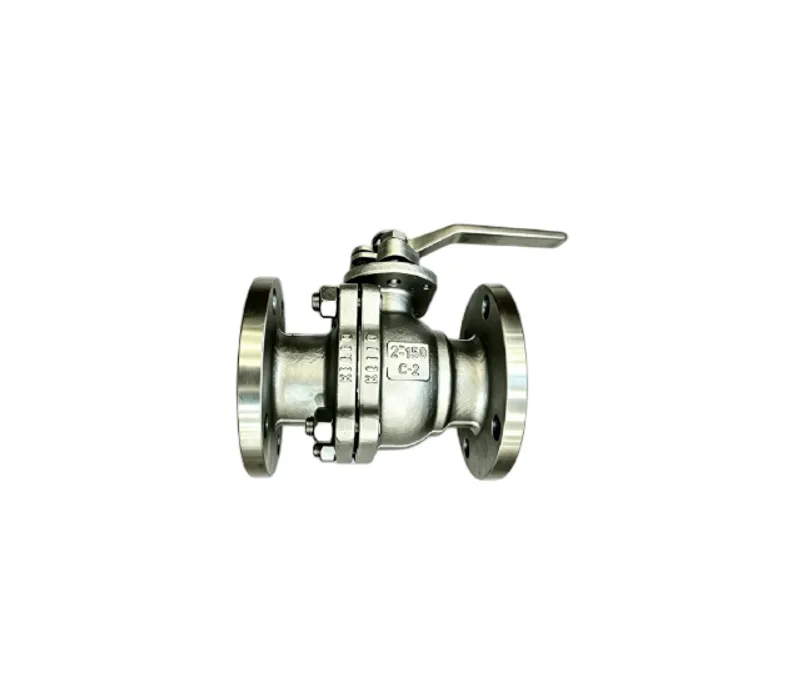
O-Type Ball Valve: The ball has a circular through-hole in the center. When the valve is fully open, the diameter of the through-hole is essentially the same as the pipe's inner diameter, forming a straight-through flow path.
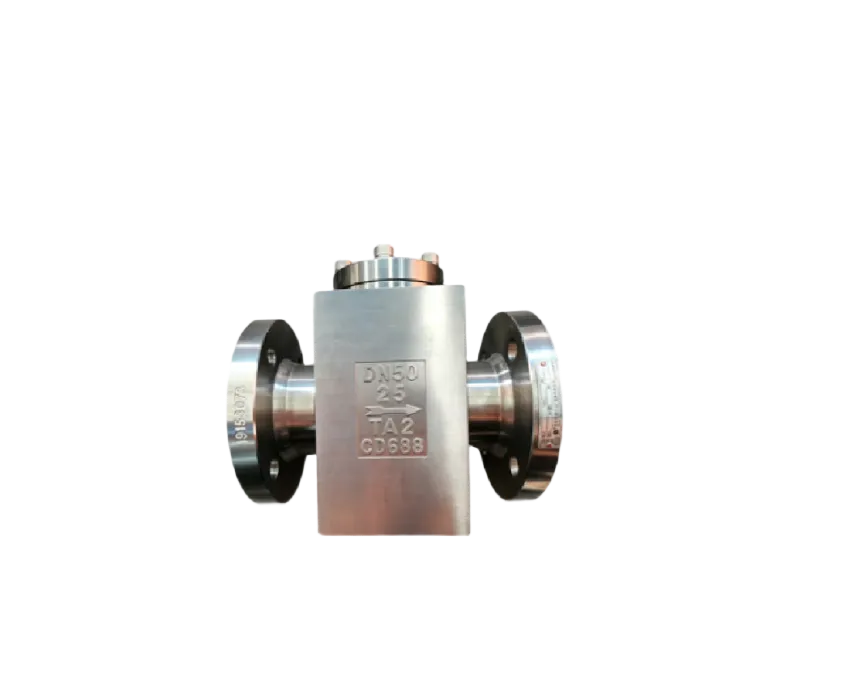
V-Type Ball Valve: The ball has a V-shaped notch. This notch can be fixed (integral ball) or formed on the ball surface through special designs (in some ball valve designs).
Flow Characteristics
O-Type Ball Valve: Exhibits an approximate quick-opening flow characteristic. At small opening degrees (e.g., 0°-15°), the flow rate increases very rapidly; after reaching a certain opening (typically around 20°-30°), the flow approaches its maximum value (over 80%–90% of full-open flow). Its main function is on/off switching (shutoff), with poor throttling performance.
V-Type Ball Valve: Exhibits an approximate equal-percentage flow characteristic. The flow rate changes relatively smoothly and more linearly with opening (especially in the small-opening range). Ideally, as the opening increases, the flow increases proportionally with the opening percentage. It is specifically designed for precise throttling and control.
Throttling Performance
O-Type Ball Valve: Poor throttling performance. At small openings, flow changes are too drastic for precise control; at medium openings (where the edge of the ball's through-hole partially blocks the flow path), flow characteristics are unstable and prone to cavitation, vibration, and noise. It is generally used only for on/off (two-position) control.
V-Type Ball Valve: Excellent throttling performance. The V-shaped notch design provides stable, predictable flow control even at small openings and achieves good linear regulation across the entire opening range. The sharp edge of the V-notch has a shearing effect on the fluid, making it especially suitable for media containing fibers, particulates, or slurries.
Shutoff Capability
O-Type Ball Valve: Very good shutoff capability. When the valve is closed (ball rotated 90°), the complete spherical surface fully blocks the flow path. With soft or metal seals, it can achieve bubble-tight shutoff (zero leakage).
V-Type Ball Valve: Relatively weaker shutoff capability. Even in the fully closed position, the smallest point of the V-shaped notch cannot form a complete sealing surface like the O-type ball (it is more like a sharp blade pressing against the seat). Although it can achieve a high leakage class (typically Class VI or V), it does not match the zero-leakage performance of a comparable O-type ball valve. Its design focus is on throttling rather than absolute shutoff.
Flow Resistance
O-Type Ball Valve: Extremely low flow resistance when fully open (low loss coefficient), close to that of a straight pipe, with very little pressure drop.
V-Type Ball Valve: Even in the fully open position, the V-shaped notch creates some flow resistance, resulting in a greater pressure drop than a comparable O-type ball valve.
Wear Resistance and Erosion Resistance (for media containing solid particles)
O-Type Ball Valve: During the switching process, especially with media containing solid particles, particles can easily become trapped between the ball and the seat, leading to scoring, wear, or even seizure of the sealing surfaces. Wear and erosion resistance are relatively poor.
V-Type Ball Valve: The sharp edge of the V-notch shears fibers and solid particles in the fluid during throttling, effectively preventing clogging. It is designed to handle media containing solids, fibers, slurries, as well as high-viscosity, crystallizing, or fouling fluids. It offers better wear resistance and erosion resistance.
Applicable Service Conditions
O-Type Ball Valve: Primarily used where fast and reliable shutoff is required. Suitable for clean liquids and gases (e.g., petroleum, natural gas, water, steam). It is the first choice for on/off valves.
V-Type Ball Valve: Primarily used where precise flow regulation and control are required. Particularly suitable for fluids containing solid particles, fibers, slurries, high-viscosity fluids, or fouling/crystallizing media (e.g., pulp, wastewater, ore slurry, mud, chemical feedstocks). It is one of the first choices for control valves.
Price: Because the V-type ball valve's ball requires more complex machining (precise V-notch formation), it is more expensive than a comparable O-type ball valve of the same size and material.
Comparison Table
|
Feature |
O-Type Ball Valve |
V-Type Ball Valve |
|
Ball Structure |
Central circular through-hole |
V-shaped notch on the ball |
|
Primary Function |
On/Off (Shutoff) |
Throttling (Flow Control) |
|
Flow Characteristic |
Approx. Quick-Opening |
Approx. Equal-Percentage |
|
Throttling Performance |
Poor (hard to control at small openings, unstable at medium openings) |
Excellent (precise control across full opening range) |
|
Shutoff Capability |
Excellent (can achieve zero leakage) |
Good (typically Class VI/V, not zero leakage) |
|
Full-Open Flow Resistance |
Extremely low (near straight pipe) |
Relatively low (resistance from V-notch) |
|
Wear & Erosion Resistance |
Relatively poor (prone to scoring/seizure by particles) |
Better (V-notch shears and prevents clogging) |
|
Suitable Media |
Clean liquids, gases |
Media with particles, fibers, slurries, high viscosity, fouling tendency |
|
Typical Applications |
On/Off control, where tight shutoff is critical |
Continuous flow regulation, dirty or viscous media |
|
Price |
Relatively lower |
Relatively higher |
How to Choose
Need reliable shutoff? → Choose the O-Type Ball Valve.
Need precise flow regulation? → Choose the V-Type Ball Valve.
Media is clean? → Either type can be used (choose based on functional needs).
Media contains particles, fibers, is viscous, or prone to fouling? → Prioritize the V-Type Ball Valve.
Budget is limited and only on/off function is needed? → Choose the O-Type Ball Valve.
In short: The O-Type ball valve is an expert at shutting off (closing tightly), while the V-Type ball valve is an expert at regulating (controlling precisely, handling dirty media). The choice depends on whether your core need is shutoff or throttling, as well as the characteristics of the media.
شخص رابط: مکس.سونگ (سونگشان)
عنوان: مدیر کل
موبایل: +86 15611322632
تلفن: +86 10 89282693
ایمیل: international@bvmc.com
آدرس: پلاک ۳، جاده لوهای، شهر پانگژوانگ، منطقه داکسینگ، پکن


حق چاپ © Beijing Valve Factory Co., Ltd
نقشه سایتاین وب سایت از کوکی ها استفاده می کند تا اطمینان حاصل شود که بهترین تجربه را در وب سایت ما به دست می آورید.




 Phone